Issued: London, UK
For media and investors only
Blenrep (belantamab mafodotin) approved in China for treatment of 2L+ relapsed/refractory multiple myeloma
- Blenrep combination showed a 42% reduction in risk of death and nearly tripled median progression-free survival versus a daratumumab-based triplet1,2
- As the only anti-BCMA approved in 2L+ multiple myeloma in China, Blenrep provides a new and needed mechanism of action in therapy1,3
- Blenrep is the only fully outpatient anti-BCMA therapy, minimising patient and healthcare burden4
GSK plc (LSE/NYSE: GSK) today announced the National Medical Products Administration (NMPA) of China has approved Blenrep (belantamab mafodotin) in combination with bortezomib and dexamethasone (BVd) for the treatment of adults with relapsed or refractory multiple myeloma who have received at least one prior line of therapy. The approval follows priority review5 of the application and Breakthrough Therapy Designation6 for the BVd combination based on its potential to provide substantial improvement over available therapies.7
The Blenrep approval is supported by data from the pivotal DREAMM-7 phase III trial. These include statistically significant and clinically meaningful progression-free survival (PFS) and overall survival (OS) results for the Blenrep combination versus a daratumumab-based triplet combination with bortezomib and dexamethasone (DVd). The safety and tolerability profiles of the Blenrep combination were broadly consistent with the known profiles of the individual agents.1,2
Hesham Abdullah, Senior Vice President, Global Head Oncology, R&D, GSK, said: “Patients with multiple myeloma who face relapse need treatment options that are both effective and accessible. Today’s approval of Blenrep brings anti-BCMA therapy to patients in China with relapsed or refractory multiple myeloma in 2L+, introducing a differentiated mechanism of action with the potential to help slow disease progression and extend survival. Further, Blenrep as the only anti-BCMA ADC is fully outpatient administered, so patients can be treated at any site of care without complex pre-administration regimens or hospitalisation.”
In China, the incidence of multiple myeloma has doubled to approximately 30,000 new cases annually and mortality has increased by 50% over the past three decades.8 Blenrep is the only anti-BCMA (B-cell maturation antigen) antibody-drug conjugate (ADC) approved in multiple myeloma, which provides patients with a differentiated mechanism of action. Blenrep can be administered to a range of patient types across treatment settings as a 30-minute outpatient infusion.
About multiple myeloma
Multiple myeloma is the third most common blood cancer globally and is generally considered treatable but not curable.9,10 There are approximately 180,000 new cases of multiple myeloma diagnosed globally each year.11 Research into new therapies is needed as multiple myeloma commonly becomes refractory to available treatments.3 Many patients with multiple myeloma are treated in a community cancer setting, leaving an urgent need for new, effective therapies with manageable side effects that can be administered outside of an academic centre.12,13
About Blenrep
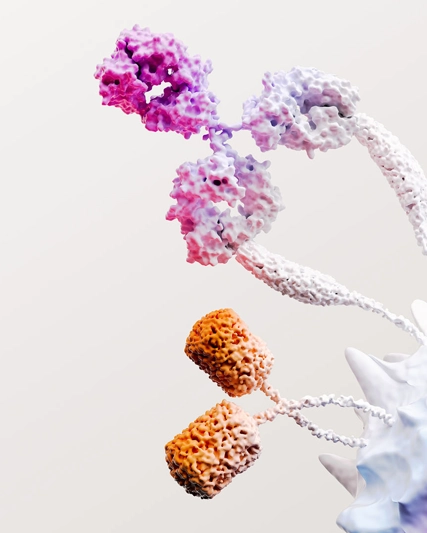
Blenrep is a monoclonal ADC comprising a humanised BCMA conjugated to the cytotoxic agent monomethyl auristatin F via a non-cleavable linker. The drug linker technology is licensed from Seagen Inc.; the monoclonal antibody is produced using POTELLIGENT Technology licensed from BioWa Inc., a member of the Kyowa Kirin Group.
Blenrep is approved in the US14 in combination with bortezomib plus dexamethasone for the treatment of adults who have previously received at least two prior lines of therapy, including a proteasome inhibitor and an immunomodulatory agent. Blenrep has received more than 15 regulatory approvals in 2L+ relapsed or refractory multiple myeloma in combination with bortezomib and dexamethasone and in combination with pomalidomide and dexamethasone, including in the European Union15, UK16, Japan17, Canada, Switzerland, Brazil and Australia. Applications are under review in other countries globally.
The EU Prescribing Information is available here.18
The US Prescribing Information is available here.4
About DREAMM-7
DREAMM-7 is a multicentre, open-label, randomised phase III clinical trial evaluating the efficacy and safety of BVd compared to DVd in patients with relapsed or refractory multiple myeloma who previously were treated with at least one prior line of multiple myeloma therapy, with documented disease progression during or after their most recent therapy. The trial enrolled 494 participants who were randomised 1:1 to receive either BVd or DVd. Belantamab mafodotin was administered at a dose of 2.5mg/kg intravenously every three weeks in combination for the first eight cycles and then continued as a single agent. The primary endpoint was PFS as per an independent review committee, with secondary endpoints including OS, duration of response (DOR), and minimal residual disease (MRD) negativity rate as assessed by next-generation sequencing. Other secondary endpoints include overall response rate (ORR), safety, and patient reported and quality of life outcomes.
In DREAMM-7 overall, BVd nearly tripled median PFS versus DVd (36.6 months versus 13.4 months, respectively (hazard ratio [HR]: 0.41 [95% confidence interval (CI): 0.31-0.53], p-value<0.00001). DREAMM-7 also met the key secondary endpoint of OS, showing a statistically significant and clinically meaningful 42% reduction in the risk of death at a median follow-up of 39.4 months favouring BVd (n=243) versus DVd (n=251) (HR 0.58; 95% CI: 0.43-0.79; p=0.00023). The three-year OS rate was 74% in the BVd arm and 60% in the DVd arm.2
In DREAMM-7, BVd consistently benefited a broad range of patients, including those with poor prognostic features or outcomes, such as high-risk cytogenetics or those refractory to lenalidomide. The trial also showed clinically meaningful improvements across all other secondary efficacy endpoints, including deeper and more durable responses versus the comparator.2
DREAMM-7 showed that eye-related side effects associated with Blenrep can be managed and reversed with appropriate dose modifications and follow-up. This allowed patients to maintain benefit and resulted in low rates of discontinuation due to eye-related side effects (≤9%). The most commonly reported non-ocular adverse events (>30% of participants) in the Blenrep combination arm were thrombocytopenia (87%) and diarrhoea (32%) in DREAMM-7.2
PFS results19 were presented at the American Society of Clinical Oncology (ASCO) Plenary Series in February 2024 and published in the New England Journal of Medicine. OS results20 were presented at the American Society of Hematology (ASH) Annual Meeting in December 2024.
GSK in oncology
Our ambition in oncology is to help increase overall quality of life, maximise survival and change the course of disease, expanding from our current focus on blood and women’s cancers into lung and gastrointestinal cancers, as well as other solid tumours. This includes accelerating priority programmes such as antibody-drug conjugates targeting B7-H3 and B7-H4, and IDRX-42, a highly selective KIT tyrosine kinase inhibitor.
About GSK
GSK is a global biopharma company with a purpose to unite science, technology, and talent to get ahead of disease together. Find out more at www.gsk.com.
Cautionary statement regarding forward-looking statements
GSK cautions investors that any forward-looking statements or projections made by GSK, including those made in this announcement, are subject to risks and uncertainties that may cause actual results to differ materially from those projected. Such factors include, but are not limited to, those described in the “Risk Factors” section in GSK’s Annual Report on Form 20-F for 2025.
References
- Hungria V, Robak P, Hus M et al. Belantamab Mafodotin, Bortezomib, and Dexamethasone for Multiple Myeloma. N Engl J Med. 2024 Aug 1;391(5):393-407. doi: 10.1056/NEJMoa2405090. Epub 2024 Jun 1. PMID: 38828933.
- Hungria V, Robak P, H Marek, et al. Belantamab Mafodotin, Bortezomib, and Dexamethasone Vs Daratumumab, Bortezomib, and Dexamethasone in Relapsed/Refractory Multiple Myeloma: Overall Survival Analysis and Updated Efficacy Outcomes of the Phase 3 Dreamm-7 Trial. Presented at the 66th American Society of Hematology (ASH) Annual Meeting and Exposition. December 2024.
- Nooka AK, Kastritis E, Dimopoulos MA. Treatment options for relapsed and refractory multiple myeloma. Blood. 2015;125(20). doi:10.1182/blood-2014-11-568923.
- Blenrep US Prescribing Information.
- GSK press release issued 9 December 2024. Blenrep (belantamab mafodotin) combination accepted for priority review in China in relapsed/refractory multiple myeloma. Available at: https://www.gsk.com/en-gb/media/press-releases/blenrep-belantamab-mafodotin-combination-accepted-for-priority-review-in-china-in-relapsedrefractory-multiple-myeloma/.
- GSK press release issued 13 September 2024. Blenrep (belantamab mafodotin) in combination receives Breakthrough Therapy Designation in China for treatment of relapsed/refractory multiple myeloma. Available at: https://www.gsk.com/en-gb/media/press-releases/blenrep-belantamab-mafodotin-in-combination-receives-breakthrough-therapy-designation-in-china-for-treatment-of-relapsedrefractory-multiple-myeloma/.
- China Drug Registration Regulation. Available at: http://www.gov.cn/gongbao/content/2020/content_5512563.htm. Accessed 16 March 2026.
- Liu J, Liu W, Mi L, et al. Burden of multiple myeloma in China: an analysis of the Global Burden of Disease, Injuries, and Risk Factors Study 2019. Chin Med J (Engl). 2023;136(23):2834-2838. Published 2023 Dec 5. doi:10.1097/CM9.0000000000002600.
- Sung H, Ferlay J, Siegel R, et al. Global Cancer Statistics 2020: GLOBOCAN Estimates of Incidence and Mortality Worldwide for 36 Cancers in 185 Countries. CA Cancer J Clin. 2021;71(3):209-249. doi:10.3322/caac.21660.
- Kazandjian D. Multiple myeloma epidemiology and survival: A unique malignancy. Semin Oncol. 2016;43(6):676–681.doi: 10.1053/j.seminoncol.2016.11.004.
- Global Cancer Observatory. International Agency for Research on Cancer. World Health Organization. Multiple Myeloma fact sheet. Available at: https://gco.iarc.who.int/media/globocan/factsheets/cancers/35-multiple-myeloma-fact-sheet.pdf. Accessed 5 March 2025.
- Gajra A, Zalenski A, Sannareddy A, et al. Barriers to Chimeric Antigen Receptor T-Cell (CAR-T) Therapies in Clinical Practice. Pharmaceut Med. 2022 Jun;36(3):163-171.
- Crombie J, Graff T, Falchi L, et al. Consensus recommendations on the management of toxicity associated with CD3×CD20 bispecific antibody therapy. Blood (2024) 143 (16): 1565–1575.
- GSK press release issued 23 October 2025. Blenrep approved by US FDA for use in treatment of relapsed/refractory multiple myeloma. Available at: https://www.gsk.com/en-gb/media/press-releases/blenrep-approved-by-us-fda-for-use-in-treatment-of-relapsedrefractory-multiple-myeloma/.
- GSK press release issued 24 July 2025. Blenrep (belantamab mafodotin) combinations approved in EU for treatment of relapsed/refractory multiple myeloma. Available at: https://www.gsk.com/en-gb/media/press-releases/blenrep-belantamab-mafodotin-combinations-approved-in-eu-for-treatment-of-relapsedrefractory-multiple-myeloma/.
- GSK press release issued 17 April 2025. Blenrep (belantamab mafodotin) combinations approved by UK MHRA in relapsed/refractory multiple myeloma. Available at: https://www.gsk.com/en-gb/media/press-releases/blenrep-belantamab-mafodotin-combinations-approved-by-uk-mhra-in-relapsedrefractory-multiple-myeloma/.
- GSK press release issued 19 May 2025. Blenrep (belantamab mafodotin) combinations approved in Japan for treatment of relapsed/refractory multiple myeloma. Available at https://www.gsk.com/en-gb/media/press-releases/blenrep-belantamab-mafodotin-combinations-approved-in-japan/.
- European Medicines Agency. Available at: https://www.ema.europa.eu/en/medicines/human/EPAR/blenrep. Accessed 16 March 2026.
- GSK press release issued 05 February 2024. DREAMM-7 phase III trial shows Blenrep combination nearly tripled median progression-free survival versus standard of care combination in patients with relapsed/refractory multiple myeloma. Available at: https://www.gsk.com/en-gb/media/press-releases/dreamm-7-phase-iii-trial-shows-pfs-improvement-and-strong-os-trend-for-blenrep-combo-versus-soc-combo-in-multiple-myeloma/.
- GSK press release issued 09 December 2024. Blenrep shows significant overall survival benefit, reducing the risk of death by 42% in multiple myeloma at or after first relapse. Available at: https://www.gsk.com/en-gb/media/press-releases/blenrep-shows-significant-overall-survival-benefit-reducing-the-risk-of-death-by-42-in-multiple-myeloma-at-or-after-first-relapse/.