Issued: London, UK
For media and investors only
Depemokimab receives positive CHMP opinion for severe asthma with type 2 inflammation and chronic rhinosinusitis with nasal polyps
- If approved, depemokimab will be the first and only ultra-long-acting biologic in the EU to treat respiratory diseases
- Positive opinion based on four phase III trials with statistically significant and clinically meaningful primary endpoints across severe asthma and chronic rhinosinusitis with nasal polyps (CRSwNP)
- In Europe, an estimated 3 million people live with severe asthma and patients with CRSwNP face poorly controlled symptoms
GSK plc (LSE/NYSE: GSK) today announced that the Committee for Medicinal Products for Human Use (CHMP) of the European Medicines Agency (EMA) has recommended the approval of depemokimab in two indications:
- as add-on maintenance treatment for severe asthma with type 2 inflammation characterised by blood eosinophil count in adults and adolescents 12 years and older who are inadequately controlled despite high dose inhaled corticosteroids (ICS) plus another asthma controller;
- as an add-on therapy with intranasal corticosteroids for the treatment of adult patients with severe CRSwNP for whom therapy with systemic corticosteroids and/or surgery do not provide adequate disease control.
The European Commission decision on approval is expected in Q1 2026.
The positive opinion is based on data from the SWIFT and ANCHOR phase III trials which showed sustained efficacy with a twice-yearly dosing regimen for depemokimab. Each of the four trials met their primary or co-primary endpoints with statistically significant and clinically meaningful results, comparing the addition of depemokimab to standard of care versus standard of care alone. The trials support the potential for depemokimab to provide ultra-long-acting protection from asthma exacerbations as well as to alleviate symptoms associated with CRSwNP in just two doses a year.1,2
Kaivan Khavandi, SVP & Global Head, Respiratory, Immunology & Inflammation R&D, GSK said: “Many patients with severe asthma continue to face frequent exacerbations, hospital visits and exposure to chronic oral corticosteroids, highlighting the need for new therapies that deliver durable control with less treatment burden. Today’s positive CHMP opinion means that depemokimab could become the first and only ultra-long-acting biologic approved in Europe for the treatment of severe asthma with type 2 inflammation and CRSwNP. In just two doses a year, depemokimab could help redefine care for millions of patients.”
Asthma affects more than 42 million people in Europe.3 About 5-10% of patients experience severe asthma, and many continue to experience exacerbations and reduced quality of life despite treatment.4 Depemokimab’s sustained suppression of type 2 inflammation has the potential to address the underlying drivers of additional diseases such as CRSwNP, helping to alleviate associated symptoms. 5-7
The pooled results from SWIFT showed a 54% reduction in clinically significant exacerbations (asthma attacks) over 52 weeks [rate ratio 0.46, 95% confidence interval (0.36, 0.59), nominal p<0.001] (AER depemokimab = 0.51 exacerbations per year versus placebo = 1.11).1 Additionally, this pooled analysis showed a 72% reduction [RR 0.28, 95% CI (0.13, 0.61), nominal p=0.002] (AER: depemokimab = 0.02 versus placebo = 0.09) in the secondary endpoint of clinically significant exacerbations requiring hospitalisation or emergency department visit compared to placebo.1 In AGILE, an open-label 12-month extension study, depemokimab maintained the results seen in SWIFT-1 and SWIFT-2, confirming the sustained safety and efficacy of a twice-yearly dose of depemokimab over the course of two years.
Pooled results from the ANCHOR trials showed an improvement (reduction) from baseline in nasal polyp score (scale: 0-8) at 52 weeks [treatment difference -0.7, 95% CI (-0.9, -0.4), nominal p<0.001] and in nasal obstruction verbal response scale (scale: 0-3) over weeks 49-52 [treatment difference -0.24, 95% CI (-0.39, -0.08), nominal p=0.003].2
Across these trials, depemokimab was well-tolerated, with patients experiencing a similar rate and severity of side effects as those receiving placebo.1,2
About the SWIFT phase III trials
Results from the SWIFT trials were presented at the 2024 European Respiratory Society International Conference and published in the New England Journal of Medicine.
The SWIFT-1 and SWIFT-2 clinical trials assessed the efficacy and safety of depemokimab adjunctive therapy in 382 and 380 participants with severe asthma who were randomised to receive depemokimab or a placebo respectively, in addition to their standard of care (SOC) treatment with medium to high-dose inhaled corticosteroids plus at least one additional controller. The full analysis set in SWIFT-1 included 250 patients in the depemokimab plus SOC arm and 132 in the placebo plus SOC arm; in SWIFT-2, 252 patients were included in the depemokimab plus SOC arm and 128 in the placebo plus SOC arm.1
About the ANCHOR phase III trials
Results from the ANCHOR trials were presented at the 2025 American Academy of Allergy, Asthma and Immunology (AAAAI) and World Allergy Organization (WAO) Joint Congress and published in The Lancet.
ANCHOR-1 included 143 patients in the depemokimab plus SOC arm and 128 in the placebo plus SOC arm; in ANCHOR-2, 129 patients were included in the depemokimab plus SOC arm and 128 in the placebo plus SOC arm. All 528 patients had inadequately controlled CRSwNP, including nasal polyps in both nasal cavities (an endoscopic bilateral NPS ≥5), and had either undergone previous surgery for CRSwNP, had received previous treatment with SCS or were intolerant to SCS. Patients received depemokimab or placebo at six-monthly intervals (26 weeks) in addition to SOC (maintenance intranasal corticosteroids).2
About depemokimab
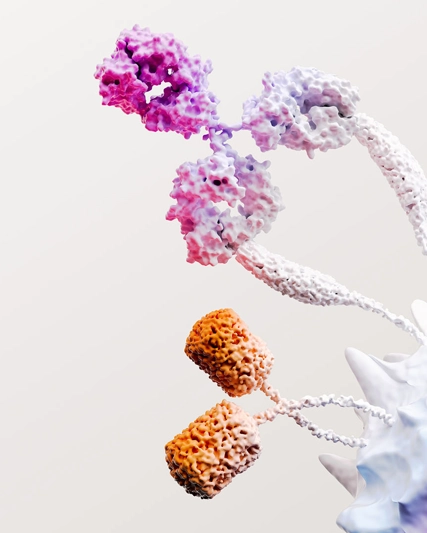
Depemokimab is the first ultra-long-acting biologic being evaluated for certain respiratory diseases with underlying type 2 inflammation, such as severe asthma and CRSwNP. It combines high interleukin-5 (IL-5) binding affinity and high potency with an extended half-life to enable twice-yearly dosing.1,2 IL-5 is a key cytokine in type 2 inflammation.8
Depemokimab is currently not approved anywhere in the world.
About GSK in respiratory
GSK continues to build on decades of pioneering work to deliver more ambitious treatment goals, develop the next generation standard of care, and redefine the future of respiratory medicine for hundreds of millions of people with respiratory diseases. With an industry-leading respiratory portfolio and pipeline of vaccines, targeted biologics, and inhaled medicines, GSK is focused on improving outcomes and the lives of people living with all types of asthma and COPD along with less understood refractory chronic cough or rarer conditions like systemic sclerosis with interstitial lung disease. GSK is harnessing the latest science and technology with the aim of modifying the underlying disease dysfunction and preventing progression.
About GSK
GSK is a global biopharma company with a purpose to unite science, technology, and talent to get ahead of disease together. Find out more at gsk.com.
Cautionary statement regarding forward-looking statements
GSK cautions investors that any forward-looking statements or projections made by GSK, including those made in this announcement, are subject to risks and uncertainties that may cause actual results to differ materially from those projected. Such factors include, but are not limited to, those described in the “Risk Factors” section in GSK’s Annual Report on Form 20-F for 2024, and GSK’s Q3 Results for 2025.
References
Jackson D., et al. Twice-Yearly Depemokimab in Severe Asthma with an Eosinophilic Phenotype. NEJM. September 2024. Vol. 391 No. 24.DOI: 10.1056/NEJMoa2406673.
Gevaert, Philippe et al. Efficacy and safety of twice per year depemokimab in chronic rhinosinusitis with nasal polyps (ANCHOR-1 and ANCHOR-2): phase 3, randomised, double-blind, parallel trials. The Lancet, Volume 405, Issue 10482, 911 – 926. DOI: 10.1016/S0140-6736(25)00197-7.
International Respiratory Coalition. Asthma. Available at: https://international-respiratory-coalition.org/diseases/asthma/. Accessed December 2025.
Wang E, et al. Characterization of Severe Asthma Worldwide: Data From the International Severe Asthma Registry. CHEST, Volume 157, Issue 4, 790 – 804. https://doi.org/10.1016/j.chest.2019.10.053.
Laidlaw TM, et al. Chronic rhinosinusitis with nasal polyps and asthma. J Allergy Clin Immunol. 2021;147(2):603-609. DOI: 10.1016/j.jaip.2020.09.063.
Joustra, Gonneke E et al. “Long-term clinical control in chronic rhinosinusitis: Outcomes more than five years after surgery.” European archives of oto-rhino-laryngology: official journal of the European Federation of Oto-Rhino-Laryngological Societies (EUFOS): affiliated with the German Society for Oto-Rhino-Laryngology - Head and Neck Surgery vol. 282,9 (2025): 4661-4668. DOI:10.1007/s00405-025-09529-z.
Fokkens WJ, et al. EUFOREA consensus on biologics for CRSwNP with or without asthma. Allergy, Volume 74, Issue 12, 2312 – 2319. DOI: 101.1111/all.13875
“What Is Type 2 Inflammation?” Allergy & Asthma Network, 22 May 2025, allergyasthmanetwork.org/health-a-z/type-2-inflammation-resources/.