Issued: London, UK
For media and investors only
Hibsago (bepirovirsen) approved in Japan as first and only functional cure for chronic hepatitis B
First global approval for Hibsago
Chronic hepatitis B affects nearly one million people in Japan1 with nationwide efforts for screening and treatment2
Approval accelerated by SENKU designation, granted to innovative medicines with potential to address high unmet medical need3
GSK plc (LSE/NYSE: GSK) today announced that Japan’s Ministry of Health, Labour and Welfare (MHLW) has approved Hibsago (bepirovirsen), an antisense oligonucleotide (ASO), as a functional cure for chronic hepatitis B (CHB) virus infection in adult patients who have received at least 6 months of prior nucleos(t)ide analogue therapy and meet pre-defined viral markersi. This is the first global approval for bepirovirsen, and the first and only functional cure treatment for CHB approved in Japan.
CHB is a major public health challenge and a leading cause of liver cancer globally.4 In Japan, nearly one million people live with the disease and it contributes to around 4,000 deaths annually.1 The Japanese government has demonstrated strong commitment to tackling CHB including through nationwide screening and treatment programmes.2
Tony Wood, Chief Scientific Officer, GSK, said: “For the first time, a treatment approved for functional cure is available to people living with chronic hepatitis B in Japan with Hibsago. After 6-months of treatment with Hibsago, patients could be freed from life-long therapy5 and reduce their risk of long-term liver complications. This is a major advance for CHB management and our innovative hepatology portfolio, and we look forward to further regulatory decisions in other countries.”
Approval in Japan was supported by results from the B-Well phase III trials showing unprecedented functional cure rates of 19% in adults with ≤3000 IU/ml HBsAg, compared to current standard of care alone which typically only achieves a 1% functional cure rate after one year of treatment.6 Functional cure occurs when the hepatitis B virus DNA and viral protein – HBsAg – are undetectable for at least 24 weeks after stopping all treatment. This indicates the disease is controlled by the immune system without medication. A loss in HBsAg is associated with up to an 89% reduction in risk of liver cancer and a 62% reduction in risk of all-cause mortality.7
This approval was accelerated by SENKU designation, granted to innovative medicines with potential to address high unmet medical need.3
GSK continues to advance regulatory submissions for bepirovirsen across multiple geographies with decisions, including the US, expected in the coming months. Development of bepirovirsen in future sequential treatment strategies is also ongoing.
Results from the B-Well phase III trials
Pooled data from the B-Well phase III trials showed that 6-month treatment with bepirovirsen achieved a statistically significant and clinically meaningful 19% functional cure response rate (233 of 1,220 vs. 0 of 614 in the placebo group; p<0.001 in both trials) in the overall study population (adults with ≤3000 IU/ml HBsAg level), meeting the primary endpoint. In a key secondary endpoint, a functional cure rate of 26% (200 of 768 vs. 0 of 393 in the placebo group; p<0.001 in both trials) was achieved in participants with ≤1000 IU/ml HBsAg level, a group that represents approximately 45% of diagnosed CHB cases globally.8
Separately, exploratory analyses showed bepirovirsen reduced HBsAg to ≤100 IU/ml in 49% of recipients (598 of 1220) in the overall study population and in 62% of recipients in the ≤1000 IU/ml (476 of 768) sub-group9 as of the week 72 visit. Medical literature has linked this level of low surface antigen with increased immune control and improved patient outcomes.10,11,12
The trials showed an acceptable safety and tolerability profile consistent with other studies of bepirovirsen. The three most frequently observed adverse events were injection site erythema, local pain and temporary rise in the blood level of a liver enzyme.
About bepirovirsen
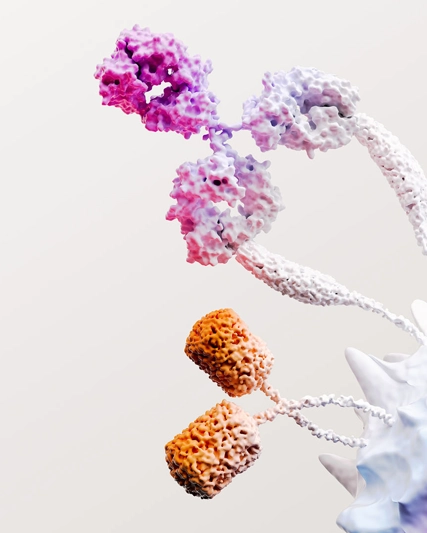
Bepirovirsen is an antisense oligonucleotide (ASO) designed to recognise and inhibit the production of the genetic components (i.e. RNA) of the hepatitis B virus that can lead to chronic disease, potentially allowing a person’s immune system to regain control. Bepirovirsen reduces the production of RNA and viral proteins associated with HBV, suppresses the level of hepatitis B surface antigen (HBsAg) in the blood, and stimulates the immune system to increase the chances of a durable and sustained response.
GSK licensed bepirovirsen from Ionis and collaborated with them on its development. Bepirovirsen has been recognised by global regulatory authorities for its innovation and potential to address significant unmet need in hepatitis B, with Fast Track and Breakthrough Designations from the US FDA, Breakthrough Therapy and Priority Review designation in China and SENKU designation in Japan.
About the B-Well trials
The B-Well 1 and B-Well 2 trials are global multi-centre, randomised, double-blind, placebo-controlled trials conducted in 29 countries. They assessed the efficacy, safety, pharmacokinetic profile, and durability of functional cure in nucleos(t)ide analogue-treated adult participants with chronic hepatitis B and baseline surface antigen (HBsAg) ≤3000 IU/ml. The primary endpoint assessed the proportion of participants achieving functional cure in patients with baseline HBsAg ≤3000 IU/ml. A key ranked secondary endpoint evaluated functional cure in participants with baseline HBsAg ≤1000 IU/ml. Functional cure is defined as HBsAg being undetectable in the blood for at least 24 weeks after stopping all treatment, indicating that the disease is controlled by the immune system without medication.
About chronic hepatitis B
Hepatitis B is a viral infection that can cause both acute and chronic liver disease. Chronic hepatitis B occurs when the immune system is unable to clear the virus, resulting in long-lasting infection that affects more than 240 million people worldwide. The disease causes approximately 1.1 million deaths each year13, and is a leading cause of liver cancer cases globally4. Currently, many patients often require lifelong antiviral therapy for viral suppression, making functional cure a critical goal in disease management.
About GSK’s hepatology portfolio
GSK is extending its expertise in inflammation to develop a next wave of innovation for the millions of people affected by chronic and life-threatening fibro-inflammatory liver conditions. GSK has a growing hepatology pipeline, harnessed by the science of the immune system and advanced technologies, with a focus on chronic hepatitis B, metabolic dysfunction-associated steatohepatitis (MASH) and alcohol-associated liver disease (ALD).
About GSK
GSK is a global biopharma company with a purpose to unite science, technology, and talent to get ahead of disease together. Find out more at www.gsk.com.
Cautionary statement regarding forward-looking statements
GSK cautions investors that any forward-looking statements or projections made by GSK, including those made in this announcement, are subject to risks and uncertainties that may cause actual results to differ materially from those projected. Such factors include, but are not limited to, those described in the “Risk Factors” section in GSK’s Annual Report on Form 20-F for 2025, and GSK’s Q2 Results for 2026.
Footnote
[i] Hibsago (bepirovirsen) has been approved as a functional cure in chronic hepatitis B (CHB) virus infection in patients who have received nucleos (t) ide analogue therapy for at least 6 months before starting this drug and whose HBs antigen level at starting this drug is ≤ 3000 IU/mL and HBV DNA level is < 90 IU/mL (1.95logIU/mL).
References
Polaris Observatory Dashboard. Available at https://cdafound.org/polaris/dashboard (last accessed August 2026)
Korenaga M, Kanto T. Testing, diagnosis of viral hepatitis, and the follow-up policy in Japan. Glob Health Med. 2021 Oct 31;3(5):308-313. doi: 10.35772/ghm.2021.01072. PMID: 34782874; PMCID: PMC8562087.
GSK Press release, Bepirovirsen granted SENKU designation in Japan for chronic hepatitis B, August 2024. Available at: https://www.gsk.com/en-gb/media/press-releases/bepirovirsen-granted-senku-designation-in-japan-for-chronic-hepatitis-b/ (last accessed July 2026)
Rumgay H et al . Global burden of primary liver cancer in 2020 and predictions to 2040. J Hepatol. 2022;77:1598–1606. doi: 10.1016/j.jhep.2022.08.021
Hou J, Lim S-G, Buti M, et al. Phase 3 results of bepirovirsen treatment for chronic hepatitis B virus infection. N Engl J Med 2026;394:2395-406. DOI: 10.1056/NEJMoa2515131
Slaets, L. et al. “Systematic review with meta-analysis: hepatitis B surface antigen decline and seroclearance in chronic hepatitis B patients on nucleos(t)ide analogues or pegylated interferon therapy” in GastroHep 2, 106–116 (2020)
Drysdale M, Chang R, Wang S, Coutinho A, Gielen V, Man T, Song R, Duh MS, Khalili M, Theodore D. Hepatitis B Surface Antigen Loss and Improved Clinical Outcomes in US Individuals With Chronic Hepatitis B Virus Infection. J Viral Hepat. 2026 Jun;33(6):e70184. doi: 10.1111/jvh.70184. PMID: 42141794; PMCID: PMC13179525.
GSK data on file, 2026
Hou J, EASL 2026. Oral presentation. Slides available upon request.
Tseng TC et al. Gut 2025;74:1896–1906
Zhou K et al. Lancet Gastroenterol Hepatol 2019;4:227–238
Tseng TC et al. Hepatology 2012;55:68–76
WHO Global Hepatitis Report 2026. Available at : https://www.who.int/publications/i/item/9789240122383 (last accessed August 2026)