People-centred medicines, from daily pills to long-acting options, have evolved significantly for human immunodeficiency virus (HIV) treatment and prevention. Experts from GSK's specialist HIV company ViiV Healthcare share how community insights are shaping scientific advances around HIV care.
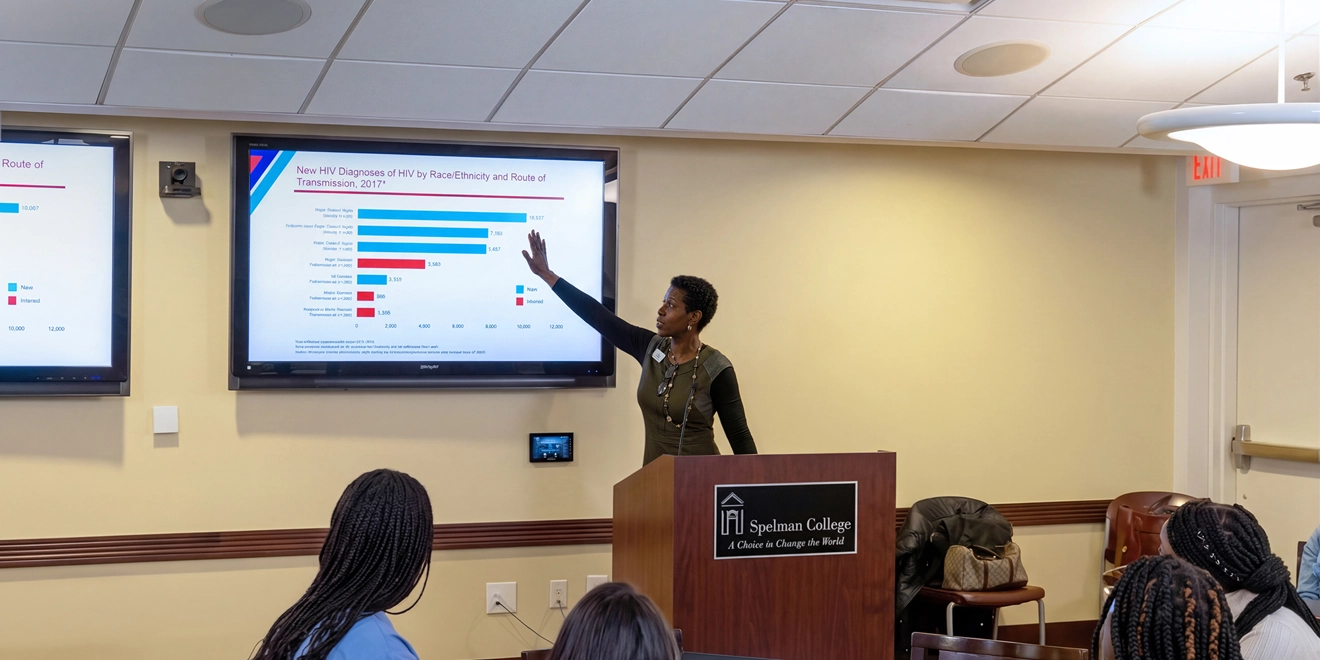
Each month, Dr. Zandraetta Tims-Cook sees hundreds of people living with or at risk of acquiring HIV at her infectious disease clinic in Atlanta, Georgia. As the primary physician there, she advises patients on prevention measures, managing the virus, choosing the best treatment plan based on the lifestyle they want, and how to maintain good health overall.
The practice is considered by many as a community base for their care. As well as medicines, they can seek peer support, information and broader awareness on all aspects of HIV.
As her practice is in a region where much of the country’s HIV burden lies, Dr. Tims-Cook wants her patients to know they can live a fulfilling life following their HIV diagnosis.
“There’s tonnes of stigma, tonnes of shame that prevent people from really seeking out what they need,” Dr. Tims-Cook tells GSK. “People just don't have the insights that we have as scientists, on how effective medicines have become in treating and preventing HIV. These innovations have helped tremendously.”
"Choice matters. There's no one-size-fits-all for all the different types of people on the globe who are needing medication.”
In 2025, almost 41 million people were living with HIV worldwide, according to UNAIDS, with over half living in East and Southern Africa. Low- and middle-income countries account for 75% of that burden.
In the US, an estimated 1.2 million people live with the virus, according to official government figures, with southern states accounting for almost half of the country’s new HIV diagnoses, disproportionately affecting people of colour.
But Dr. Tims-Cook wants people in her community to know that not only can the virus be managed well today, but progress in medicines means they also have a choice in how they manage or prevent it.
This was not the case when she started out her career in New York in the early 1990s.
At the time, she says few things were scarier than being diagnosed with HIV. People living with the virus were ostracised and forced to accept that they would die in a matter of months. “The landscape was horrible,” she describes.
The virus had not long been discovered, the scale of the epidemic not fully understood, and just one type of medicine had been found to be effective, leaving people scrambling for it the world over.
“People were desperate to get the new medications. It was the first time that we had something that would reliably work,” the physician says. “I mean, when we look back at it, they had some serious side effects, but the side effects were better than what it had been, which was possibly death. So, people were willing to accept that.”
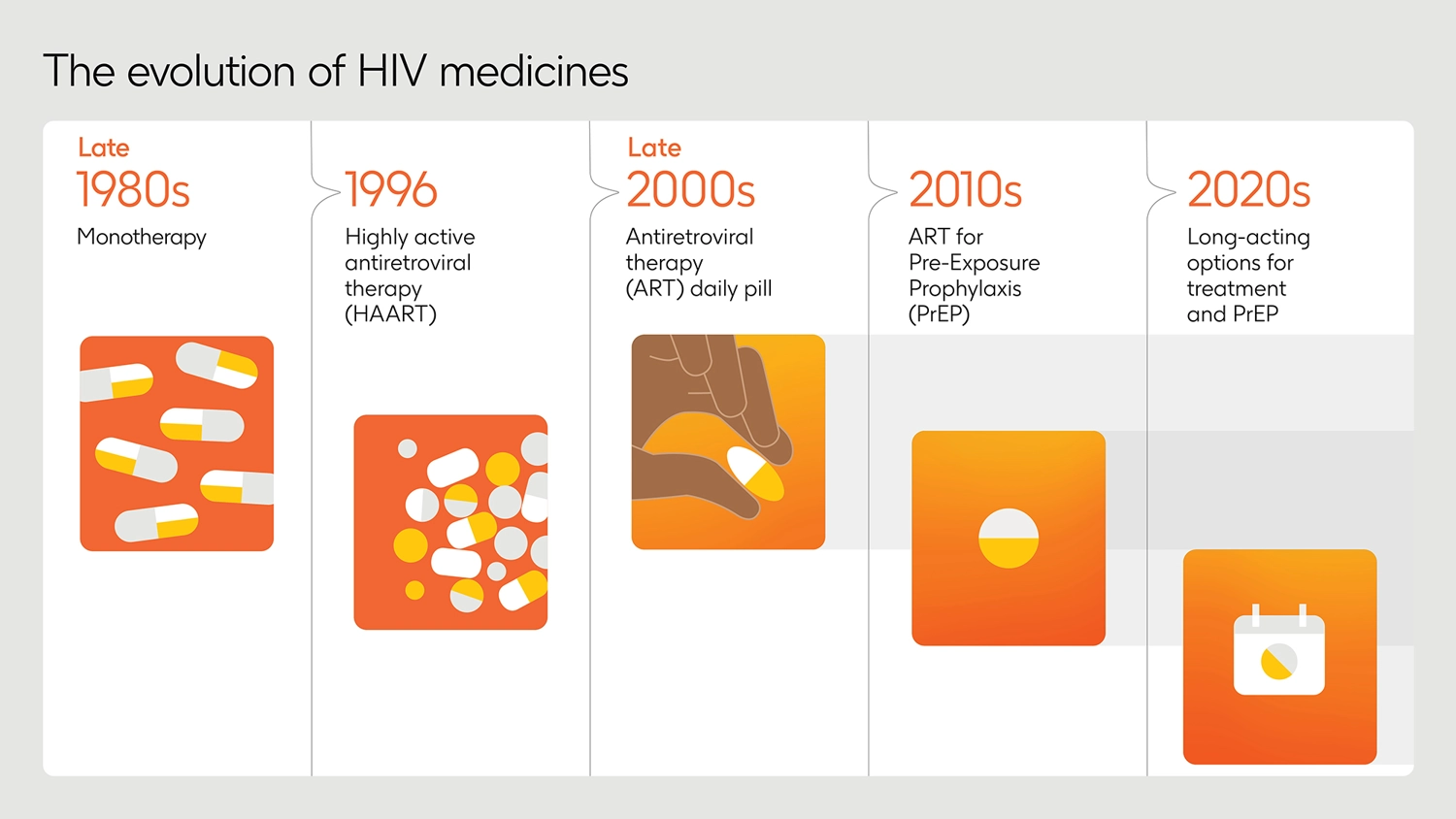
Since then, options for both treatment and prevention have evolved: cocktails of treatments to overcome resistance, a singular pill containing multiple medicines, and now, long-acting options. GSK through ViiV Healthcare is working on making new options available in the future to help people live life without HIV defining it.
“Choice matters,” explains Dr. Tims-Cook. “There's no one-size-fits-all for all the different types of people on the globe who are needing medication.”
The creation of antiretrovirals
HIV spreads among people through bodily fluids and can transmit from mother to child. The virus needs the body’s immune cells, specifically white blood cells called CD4, to replicate. This destroys the cells, weakening a person’s immunity. Over time this makes the body more prone to infections as the virus carries on replicating at a faster pace than the rate at which the immune system makes CD4 cells, meaning the body’s natural defences become compromised.
“Made of just a few viral genes, HIV can basically hijack our immune cells and start self-destructing the body,” says Charlotte Allerton, the head of research and development at GSK’s specialist HIV company, ViiV Healthcare. “Viruses can be detrimental to human health – so it’s on us to end HIV."
HIV medicines, called antiretrovirals, stop HIV from making copies of itself, in turn reducing levels of the virus in the body. Once the viral load is at very low levels, a person’s immune system can restore itself.
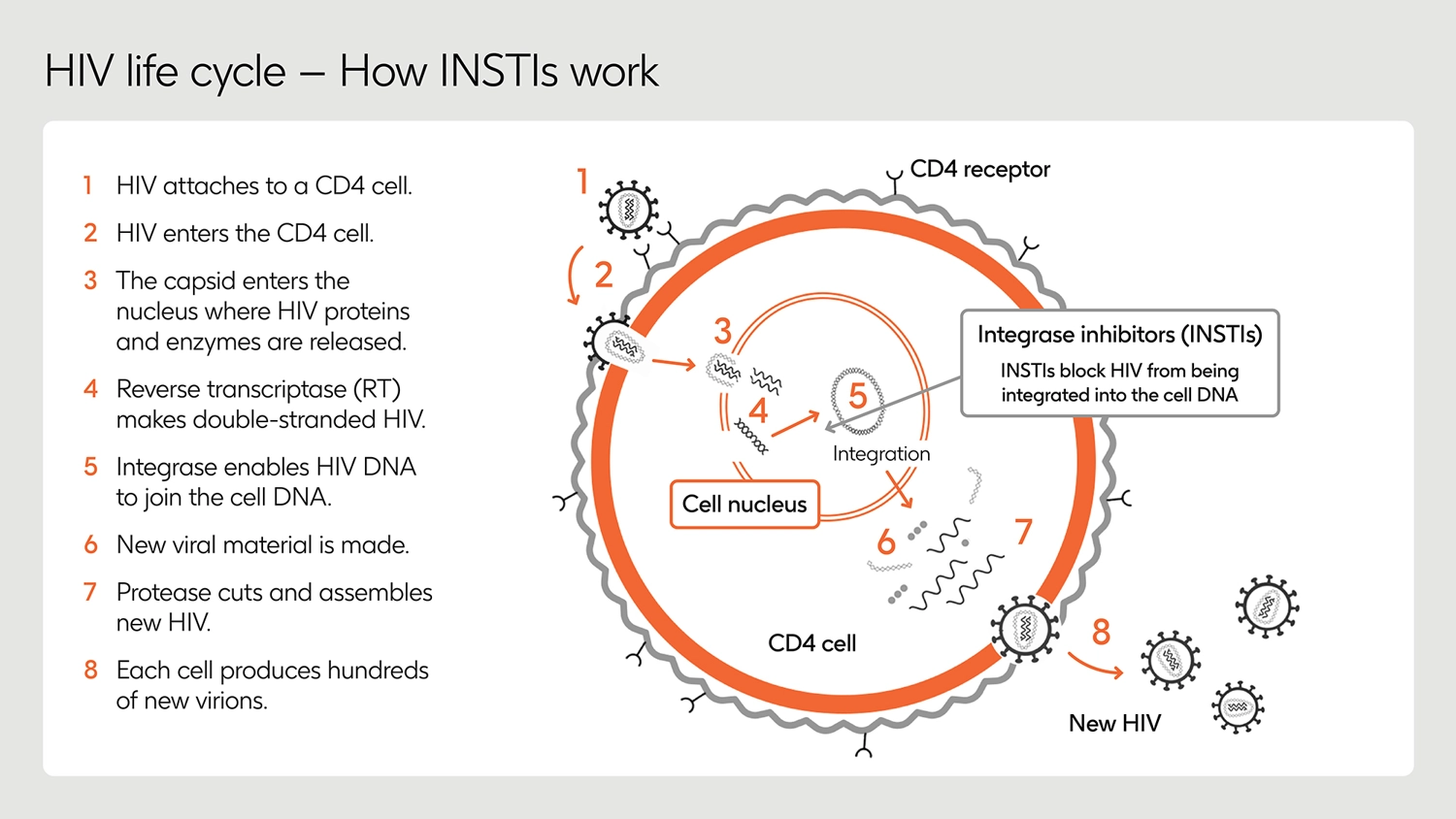
The first medicine was approved in 1987, but the virus soon developed resistance against it. To overcome this, highly active antiretroviral therapy (HAART) was pioneered in the mid-1990s and consisted of different drugs attacking multiple stages of the HIV life cycle from altering its genetic makeup to its ability to enter immune cells.
While the HAART regimens proved effective in reducing the deaths associated with HIV, it came with a range of adverse side-effects that greatly impacted people’s daily routines.
Shaun Mellors recalls having to take up to 18 pills in a day, involving strict schedules and lifestyle changes to account for the frequency of medication.
“The cocktail that I started on was challenging. It's like a gel capsule — so trying to travel with a big brown bottle of 6 tablets three times a day was difficult,” says Mellors, ViiV Healthcare’s head of patient engagement.
Adhering to the regimen daily was critical to keeping the viral load down, but with multiple medicines to keep track of, his entire life revolved around the dosing timetable, he shares.
Dr. Tims-Cook recalls treating someone who mapped out all the restrooms in her office in case her HIV medication caused side-effects during her work hours.
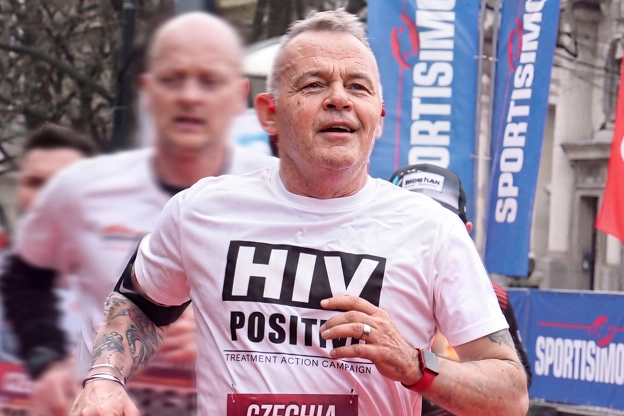
“The impact that HIV treatment had on the lives of so many people in those early years was remarkable,” Mellors, who works with communities affected by HIV through GSK’s ViiV Healthcare partnerships, tells GSK.
When he was first diagnosed with HIV, at 21-years old, he recalls being given a few months to live as there were no treatments available in the 1980s. “I had dreams. I had plans,” he shares.
He dropped out of university and became an activist to encourage public conversation around HIV. When effective medicines eventually became available, he continued dreaming and building his nearly 40-year career that helped shape the next stages of medical discovery.
Innovation to give people a choice
The HIV epidemic has disproportionately affected specific populations across the globe, like men who have sex with men as well as young women and girls. These groups are often stigmatised, creating barriers in accessing HIV care or prevention services.
It has therefore been crucial that insights from these groups feed into the evolution of new medicines, ensuring that the communities most affected help to shape the options that work best for them, explains Mellors.
GSK through ViiV Healthcare has conducted and supported over 720 real-world evidence (RWE) studies in HIV across 30 different countries since 1987. In practice, this means having an ear to the ground to understand the day-to-day lives of people with HIV, including their insights into research studies, and turning those into actionable discoveries in the lab.
RWE studies are more representative of diverse populations receiving therapies and their lived realities. Clinical trials, while robust to see efficacy, are more particular about who can be included in them, meaning they may underrepresent these key populations.
“Much of my career has been shaped and defined by ensuring that the voices of people living with HIV are heard and reflected and listened to,” Mellors says. “When we actually hear what those voices are saying, it's incredibly powerful and it's incredibly impactful.”

To overcome the challenge of complex regimens, a single pill was approved for use in 2006, combining the efficacy of multiple drugs in what is now called Antiretroviral Therapy (ART). Different drugs are combined in one pill targeting different stages of the virus’s lifecycle to block HIV from replicating, while also accounting for any mutations in the virus and increasing tolerability among people taking them.
Integrase inhibitors (INSTIs), a type of ART medication that works by blocking the enzyme integrase that HIV needs to replicate, have become the foundation of HIV antiretroviral treatment due to their effectiveness and tolerability. They also form a core part of GSK and ViiV Healthcare’s portfolios.
If taken consistently, ART suppresses virus levels and makes HIV undetectable in the blood, and therefore untransmittable, allowing the immune system to stay functioning — and people to live healthy lives with a relatively low pill burden.
Some medicines can also proactively intercept HIV before it can begin multiplying within the body, which enabled their approval as a preventative measure, known as Pre-Exposure Prophylaxis (PrEP).
But research has shown that challenges remain, with people unable to live life as they wish to.
“Fear of judgment and lack of social structures to seek medical help can make it more challenging for people to seek medication, even when it’s available, so that speaks to the need to provide other options,” says Allerton.
Dr. Tims-Cook says, highlighting that destigmatising the disease is a work-in-progress

Most recently, this decade, alternatives came in the form of long-acting options — a formulation of therapies that can be delivered less frequently. The hope is for people to have more freedom in daily life.
Experts note, however, that different HIV treatment and prevention options may be appropriate for different individuals depending on their clinical needs, preferences and circumstances. Access to longer acting options for treatment and prevention remains a focus, particularly in high-burden countries across Sub-Saharan Africa and Asia.
In the lab, Allerton and other scientists are working to make options last even longer, “so people can have even fewer disruptions to their life,” she tells GSK.
'Liberation beyond words': Reducing stigma
Through the course of her career, Dr. Tims-Cook has seen what being told about one’s HIV diagnosis can feel like — too often, it’s a combination of fear, stigma and shame. She has seen the impact of old regimens, with her patients keeping count of the number of HIV pills they took over time.
“They’ve done the math and they know that they've taken four tablets a day for the last, say, 15 years. That’s in the tens of thousands.” she says. “Now compare that to someone who is newly diagnosed in the last five years. They have no idea what kind of gift that really is.”
Dr. Tims-Cook believes each innovation in treatment has brought a sea-change in people’s experience with HIV. “That’s liberation beyond words,” she says.
A key piece missing now, in her view, is getting more people educated about HIV prevention tools, such as PrEP and PEP. PrEP can be used before sex to protect against potentially contracting the virus. Post-Exposure Prophylaxis (PEP) is an emergency medication used after sex within 72 hours of potential exposure to HIV.
“Everyone is HIV-possible, as we say today,” Dr. Tims-Cook says, highlighting that destigmatising the disease is a work-in-progress. More than 3.5 million people worldwide received PrEP at least once in 2023, according to the World Health Organization, with over 75% of them in the African region — but the numbers lag far behind the goal of 20 million set by the United Nations.
Alongside PrEP, all three experts note that a priority of equal measure is improving treatment access.
“Part of ending the HIV epidemic today is going to be ensuring that, number one, all people who need them have access to medications and also that we're providing medications that ensure adherence, which is needed for viral suppression,” says Allerton. “This can stop transmission and ensure long-term health."
According to UNAIDS, approximately 78% of people living with HIV worldwide were accessing treatment in 2024, and numbers are estimated to be similar in the US. An estimated 73% globally had suppressed viral levels.
“In order to end the epidemic and truly end HIV, we need to be working on bringing forward medicines that will reach every person everywhere.”
HIV: At a Glance
Number of people living with HIV worldwide
~41mNumber of people with HIV in the US
1.2mProportion of global HIV burden in low- and middle-income countries
75%